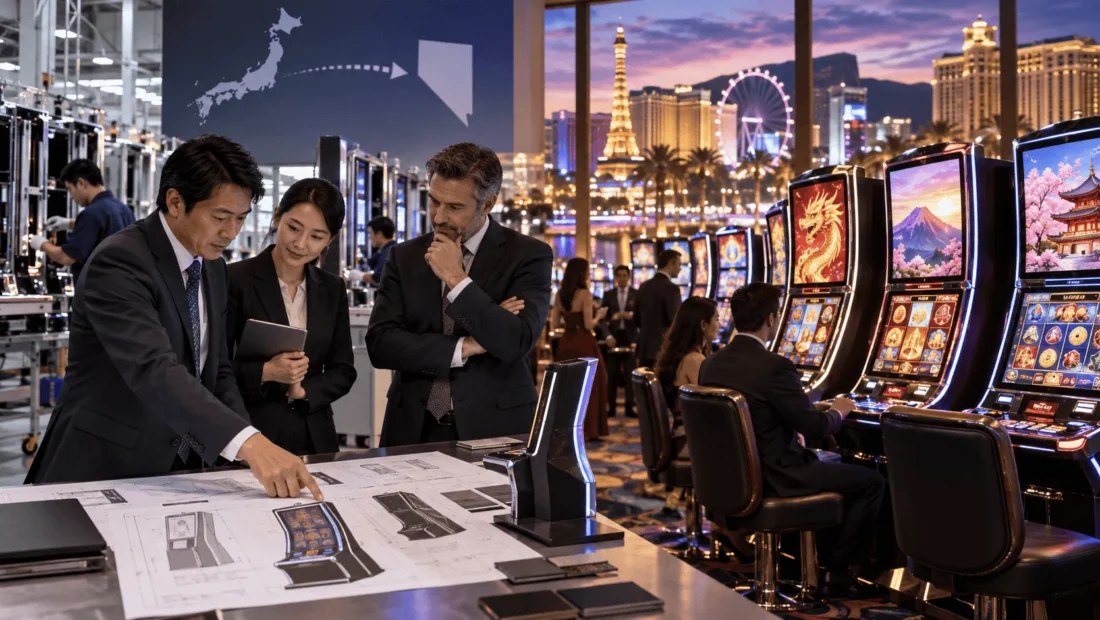
Universal Entertainment Corp. is preparing another push into the American gaming equipment business through a newly formed Nevada-focused company. The Tokyo-based group approved an agreement with UDN Gaming, Inc., a business created to manufacture and sell gaming equipment such as slot machines overseas. The structure is designed to give Universal a route into the United States while separating the licensing process from the parent company.
Universal builds a new path into the US market
The plan is significant because Nevada is not simply another sales territory. It is one of the world’s most closely scrutinized gaming jurisdictions, and Universal itself acknowledged that a direct application could involve lengthy suitability checks of major shareholders, directors, key employees and other connected individuals. Creating UDN as a separate entity is intended to simplify that process, although the licensing review could still take considerable time.
Universal is also presenting the move as part of a wider effort to create new revenue. Its existing businesses include Japanese amusement equipment and Okada Manila in the Philippines, but the company says changes in those markets have increased the need for another growth engine.
How the UDN financing arrangement works
Under the approved arrangement, Universal subsidiary Aruze USA will provide UDN with a credit facility of up to $25 million. The loan carries an interest rate of 5.12% and runs through 2035. UDN will pledge all of its issued shares as collateral, giving the transaction a clear financial structure rather than treating the new company as a simple internal operating division.
UDN is currently fully owned and controlled by Universal Entertainment president Tomohiro Okada. Because of that relationship, the deal is treated as a related-party transaction. Tomohiro recused himself from the board vote, while Universal used outside legal counsel and independent advisers to assess the terms.
The arrangement creates several potential revenue streams for Universal. In addition to interest on the loan, UDN will use Universal intellectual property and pay $100 for every gaming unit sold. It will also pay for engineering, accounting and administrative support at a 6% markup. Universal therefore stands to benefit even before any future consolidation of UDN into the wider group.
The company says that once UDN is operating, it could eventually be consolidated with Universal. For now, however, the separation is deliberate. UEC currently does not hold voting rights in UDN for its own account, while Tomohiro Okada holds all voting rights.
Why Nevada licensing is central to the strategy
Universal’s investor notice places unusual emphasis on the licensing process. Nevada gaming reviews are known for examining the suitability of people connected to licensed businesses, and Universal says a direct UEC application would likely require significant time because regulators could review major shareholders, directors, important employees and other relevant persons.
That helps explain why the company is not simply relaunching a US slot division inside the existing corporate structure. UDN gives the project a more focused ownership and governance profile for the licensing process. It does not guarantee a quick approval, but it creates a structure Universal believes is better suited to the regulatory environment.
The strategy is also shaped by Universal’s history. The company has spent years dealing with internal disputes and legal controversies connected to founder Kazuo Okada and the ownership of Okada Manila. Tomohiro Okada played a major role in the removal of his father from the company and resort. Kazuo Okada has publicly described that removal in highly critical terms.
Universal also previously tried to bring Okada Manila to the Nasdaq through a transaction associated with Jason Ader and SpringOwl Asset Management. That plan collapsed amid legal disputes, and litigation followed. Those events are relevant because Universal itself acknowledges that a Nevada review can be demanding and time-consuming. A new corporate vehicle may streamline some issues, but it does not erase the wider corporate history regulators may consider.
What Universal gains if UDN succeeds
The commercial logic is straightforward. Universal has decades of experience in gaming hardware, including pachinko, slot and arcade machines in Asia. A successful Nevada licence would give UDN access to the world’s most visible casino equipment market and could create a platform for expansion elsewhere in the United States.
The value for Universal is not limited to unit sales. The licensing and services model means UEC can earn interest, intellectual-property fees and service fees while UDN builds the business. If the operation grows and is later consolidated, Universal would then gain the operating revenue as well.
The $100-per-unit payment is especially easy to understand because it scales directly with sales volume. The 6% markup on support services adds another recurring component. Those terms show that Universal is trying to turn its existing technology and institutional knowledge into revenue even while the new company remains legally separate.
At the same time, the project carries execution risk. Slot machine manufacturing requires regulatory approval, product development, distribution and customer relationships. The source does not state when UDN expects to begin selling machines or how quickly it plans to reach commercial scale. For now, the announcement establishes the structure and funding rather than providing a finished market-entry timetable.
A search for a new revenue base
Universal says the North American expansion is part of a broader response to pressure in its existing businesses. The company pointed to a downward trend in Japan’s domestic amusement equipment market and rising competition in the Philippines integrated resort sector. Those conditions make diversification more important.
That explanation gives the Nevada plan a different meaning from a simple geographic expansion. UEC is not describing the project as an optional experiment. It is presenting the creation of new revenue sources as necessary for sustainable growth. A US gaming equipment business would sit alongside, rather than replace, the company’s Japanese and Philippine operations.
The timing also matters because Universal already has technology, brands and manufacturing experience that can be transferred into a new operation. UDN does not need to invent a gaming equipment platform from scratch. Its main challenge is turning those resources into a licensed and competitive US business.
For now, the clearest milestones are regulatory rather than commercial. UDN must move through Nevada’s licensing system, Universal must manage the related-party structure carefully, and the new company must establish itself as a credible manufacturer and supplier. The $25 million credit facility provides the financial runway, but the success of the strategy will ultimately depend on whether the licensing and market-entry process works as intended.
What happens before the strategy can become a business
Before the project can produce meaningful US equipment revenue, the licensing step has to move forward. Universal’s own statement makes clear that Nevada review is demanding and can take a considerable amount of time. Until that process is completed, the most concrete parts of the plan are the financing, ownership and service agreements already approved. UDN has a funding framework and access to Universal technology, but the source does not say that machines are already being sold in Nevada. That difference keeps the announcement in perspective: it is an entry strategy and corporate structure first, with commercial results still dependent on regulatory progress.
Why the search for new revenue matters now
Universal linked the UDN plan directly to pressure in its existing businesses. The company pointed to a downward trend in Japan’s domestic amusement equipment market and intensifying competition in the Philippine integrated-resort sector. Those statements frame the Nevada project as a diversification move rather than a simple return to a market it once knew.
That context is important because it explains why Universal is willing to finance a separate company for a licensing process that may take a long time. If the existing businesses were expanding comfortably, the urgency to create another revenue base would be lower. Instead, management says sustainable growth requires a new source of income alongside pachinko and Okada Manila.
The US equipment market gives Universal a place to apply capabilities it already has. It has long-standing experience with gaming machines, software, engineering and support. UDN can draw on those assets while trying to satisfy Nevada regulators and build a sales operation. The source does not provide revenue forecasts or a launch date, so the opportunity should not be treated as guaranteed. What is clear is that Universal sees enough strategic value in the market to commit up to $25 million of credit and a long-term technology-and-services relationship.
Why the separate-company model is doing several jobs at once
UDN is not only a licensing vehicle. The structure also separates ownership, financing, intellectual property and support services in a way that lets Universal define exactly how value flows between the companies. Aruze USA supplies the credit facility, UDN pays for the use of Universal technology, and additional engineering and administrative services are billed with a markup. That creates a structured framework around a business that is still closely connected to Universal through Tomohiro Okada.
The arrangement also gives the board a clearer way to address the related-party nature of the deal. Tomohiro’s recusal from the vote and the use of outside advisers are important because he is both Universal’s president and the sole owner of UDN. The source does not say whether that ownership will change before licensing, only that Universal currently holds no voting rights for its own account and expects UDN could eventually be consolidated.
For investors, this means the project has two phases. The first is regulatory and developmental, where UDN needs financing and permission to operate. The second is commercial, where unit sales, technology fees and support payments can begin to matter. The structure allows Universal to participate economically in the first phase without presenting UDN as a conventional wholly owned subsidiary from day one.